In modern industries, efficiency is not simply about speed—it is about durability, safety, and the ability to withstand challenging environments. Among the many stress factors that industrial equipment faces, extreme heat is one of the most demanding. Facilities like steel mills, glass factories, ceramics plants, and bakeries constantly deal with materials that are either freshly heated or retain high residual temperatures. Without proper handling, these conditions can easily damage equipment, disrupt workflows, and endanger worker safety.
This is where the high temperature conveyor belt comes into play. Though often overlooked compared to larger machinery, these belts are the unsung heroes of heat-intensive production lines. By ensuring reliable and safe transport of hot materials, they help industries maintain seamless operations.
Why Heat-Resistant Conveying Matters
When industries operate at high temperatures, the consequences of not using heat-resistant belts can be severe. Conventional rubber belts, for example, tend to soften, crack, or even melt when exposed to temperatures above their rated limits. The result is not only costly downtime but also the risk of contaminating products or even causing workplace accidents.
Consider a steel foundry as an example: slabs of steel leaving a furnace can exceed 1000°C. Even though cooling stages are applied, the conveyed materials remain at extreme temperatures well above what ordinary belts can handle. Using a standard conveyor belt in such conditions would lead to instant degradation.
By contrast, high temperature conveyor belts are engineered to endure these punishing environments. Their role can be summarized in three dimensions:
Product Protection – Ensuring that hot materials are transported without contamination or distortion.
Worker Safety – Reducing direct human contact with heat sources.
Operational Continuity – Providing reliable performance to minimize costly stoppages.
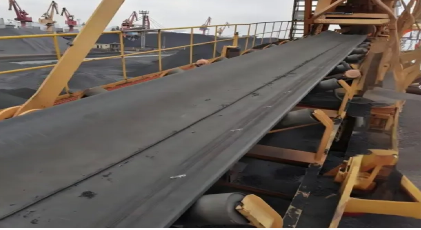
Materials that Make the Difference
Not all high temperature conveyor belts are the same. Their strength lies in the materials and technologies used in their construction.
Silicone-Coated Belts: Flexible, lightweight, and able to resist moderate levels of heat, often used in food processing and packaging. For example, baking lines often rely on silicone-coated belts to move bread or biscuits directly out of ovens.
PTFE Belts: Known for their non-stick surface and chemical resistance, these belts are widely used in industries requiring continuous exposure to high heat, such as drying textiles or curing composites.
Kevlar/Aramid Reinforced Belts: With remarkable tensile strength, Kevlar belts can carry heavy, hot loads in industries like aluminum extrusion and metallurgy.
Heat-Resistant Rubber Belts: Designed to withstand both mechanical abrasion and sustained heat, these are versatile and often found in cement plants, power stations, and brick factories.
Each of these materials provides a balance of temperature resistance, flexibility, mechanical strength, and cost-effectiveness.
Real-World Applications
The versatility of high temperature conveyor belts means they are found in a wide range of industries:
Metallurgy: Transporting billets, ingots, and castings from furnaces to cooling areas.
Glassmaking: Moving sheets of molten glass for shaping, cutting, or annealing.
Ceramics: Conveying tiles or bricks through kilns at controlled speeds.
Food Production: Baking lines, roasting coffee beans, or heat-sealing packaging films.
Automotive & Aerospace: Assisting in the curing of composites, heat treatment of metals, and insulation material processing.
Electronics: Handling soldering processes where heat resistance and precision are essential.
In each sector, the high temperature conveyor belt plays a role in balancing speed, durability, and safety.
Benefits that Go Beyond Heat Resistance
While heat resistance is the defining feature of these specialized belts, their advantages reach far beyond simply surviving extreme temperatures. A well-designed high temperature conveyor belt contributes to productivity, safety, and long-term sustainability across multiple dimensions:
1. Extended Lifespan
High temperature conveyor belts are engineered to resist cracking, hardening, and surface degradation caused by continuous exposure to heat. Compared to conventional belts, they often last two to three times longer in similar operating conditions. For industries such as metallurgy or glass manufacturing, this extended service life translates directly into fewer shutdowns and greater production reliability.
2. Reduced Downtime and Maintenance
Because these belts are less prone to thermal damage, unexpected breakdowns are minimized. Scheduled maintenance intervals are longer, and belt replacement becomes less frequent. For a large-scale production facility, even a few hours of avoided downtime can mean substantial cost savings and improved delivery timelines.
3. Energy Efficiency
Some advanced high temperature belts are designed with low-friction surfaces that reduce drag on the conveyor system. This helps lower the amount of energy needed to keep production lines moving. In sectors like food processing or ceramics, where conveyors may run continuously for long shifts, even small energy savings add up to significant reductions in operational costs and environmental footprint.
4. Consistent Product Quality
High temperature conveyor belts ensure products are transported smoothly and evenly, without sticking, contamination, or deformation. For instance, in bakeries, PTFE-coated belts prevent dough or baked goods from adhering, ensuring uniform baking results. In metallurgy, belts maintain the integrity of red-hot slabs without leaving marks or residues. This level of consistency is critical in industries where precision and uniformity define product value.
5. Worker Wellbeing and Safety
By removing the need for manual handling of hot materials, these belts greatly reduce the risk of burns, injuries, or accidents. Employees can work in safer environments with less exposure to extreme heat, contributing to higher morale and fewer workplace incidents. In many industries, this safety improvement also aligns with regulatory compliance and corporate responsibility goals.
6. Operational Flexibility
High temperature conveyor belts can be customized for different loads, speeds, and environmental conditions. This adaptability allows companies to run varied product lines on the same conveyor system without worrying about heat-induced failures. For example, a single belt might be able to handle both lightweight food items and heavier ceramic tiles in different stages of production.
7. Long-Term Cost Savings
Although the initial investment for a high temperature conveyor belt is typically higher than that of a standard belt, the total cost of ownership is significantly lower. Longer lifespan, fewer maintenance requirements, reduced downtime, and energy savings combine to generate measurable financial benefits over the long term. Companies often find that the belts pay for themselves by preventing production losses and extending operational efficiency.
Maintenance and Longevity Tips
Even the best belt benefits from good maintenance practices:
Routine Visual Checks for signs of wear, cracking, or fraying.
Correct Belt Tensioning to avoid stress and deformation.
Cleaning with Appropriate Methods depending on belt materials.
Monitoring Operating Conditions to ensure the belt isn’t exposed to unexpected stress.
Preventive Replacement before total failure occurs.
When combined with proper installation, these practices can extend belt lifespan and reliability by years.
Emerging Trends and Future Outlook
As industries evolve, so do conveyor belt technologies. Exciting innovations include:
Eco-Friendly Compounds – Reducing emissions and enabling recyclability.
Composite Reinforcements – Incorporating nano-materials for ultra-high strength and flexibility.
Smart Belts – Embedded sensors that track heat exposure, stress levels, and wear in real time.
Automation Integration – Belts designed to work seamlessly with robotic handling systems in smart factories.
These advancements are positioning high temperature conveyor belts not just as functional equipment but as strategic assets in industrial innovation.
Conclusion
From steel plants to bakeries, from ceramics kilns to aerospace workshops, the high temperature conveyor belt has become the backbone of modern heat-resistant material handling. It allows industries to operate efficiently, protect workers, and safeguard product quality even in the harshest environments.
For companies exploring options to upgrade or expand their material handling systems, partnering with a reliable manufacturer is key. Shandong Longli Belts Co., Ltd. is one such company with proven expertise in designing and producing durable, high-performance belts for challenging applications. If your business operates in heat-intensive industries and requires dependable conveying solutions, reaching out to them could be the next step toward safer, more efficient, and cost-effective operations.


